

Calorie Tracking · 2027 Preview
10 Best Calorie Tracking Apps for 2027: AI Food Scanners, Macro Trackers & Meal Planners Compared
A detailed guide to choosing the right calorie tracker for weight loss, muscle gain, and healthier eating.
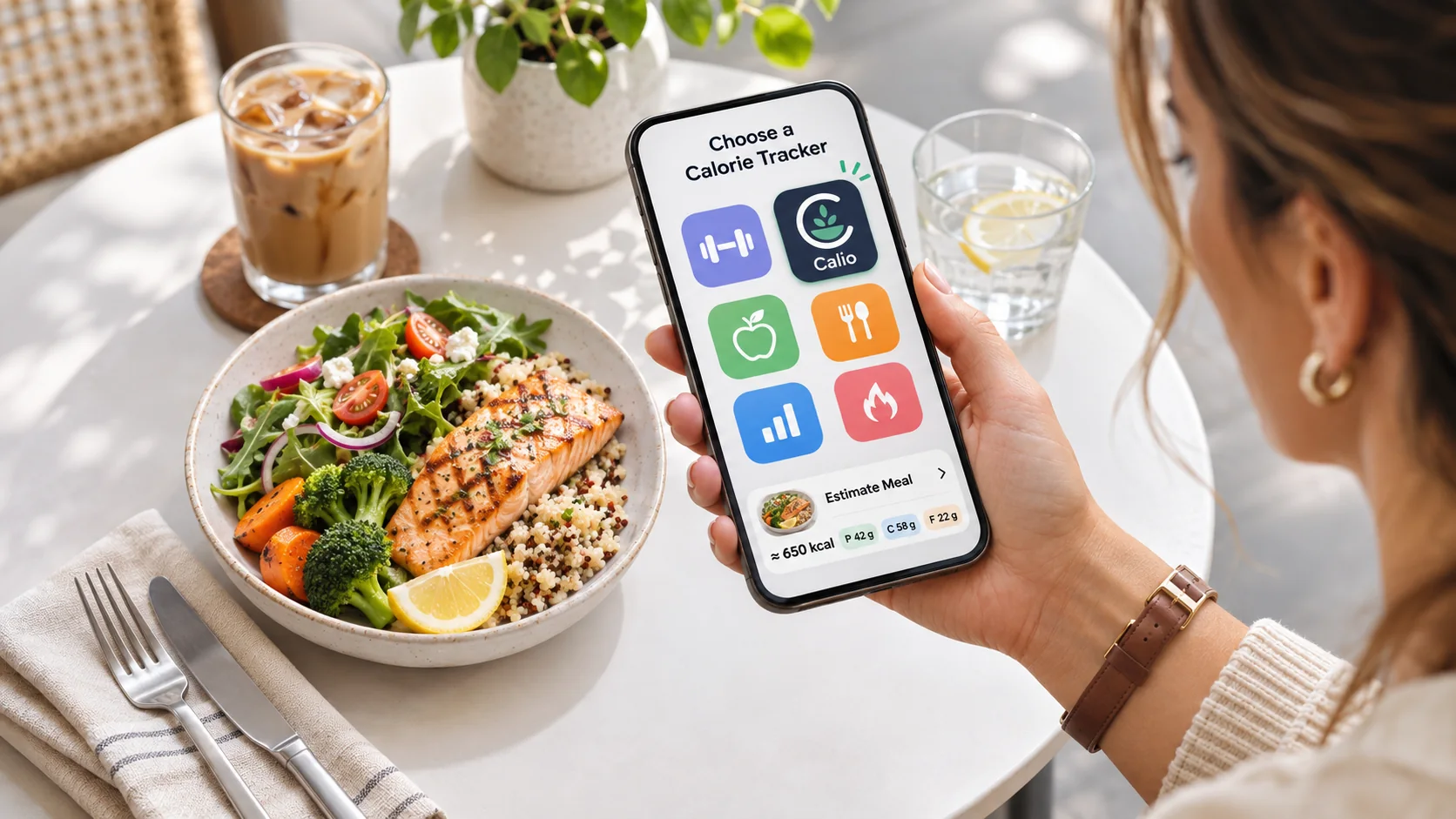
Quick Answer: The best calorie tracking app depends on what you want to achieve. MyFitnessPal is a strong choice for extensive food logging, Cronometer excels at detailed nutrient analysis, and MacroFactor offers sophisticated adaptive macro coaching. For people looking to combine AI-powered meal logging, daily nutrition insights, meal planning, and healthy habit tracking, Calio is our top all-in-one pick for 2027.
Calorie tracking has changed dramatically.
Not long ago, counting calories meant searching through food databases, weighing ingredients, and manually entering everything you ate. Today, artificial intelligence makes it possible to photograph a meal, describe it in your own words, and receive an estimated nutritional breakdown.
But the best calorie tracking apps in 2027 need to offer more than a faster way to count calories.
They should help you understand your eating habits, make informed decisions about your next meal, and build a routine that works in everyday life.
Whether your goal is weight loss, muscle gain, better nutrition, or simply understanding what you eat, the right app should make healthy eating feel more manageable—not more complicated.
In this guide, we compare 10 notable calorie tracking apps based on their food logging experience, nutrition insights, personalization, meal planning tools, and suitability for different goals.
The 10 Best Calorie Tracking Apps for 2027 at a Glance
| Rank | App | Best For |
|---|---|---|
| 1 | Calio | Best all-in-one AI nutrition companion |
| 2 | MyFitnessPal | Best for an established food logging ecosystem |
| 3 | Cronometer | Best for detailed micronutrient tracking |
| 4 | YAZIO | Best for calorie tracking and intermittent fasting |
| 5 | Cal AI | Best for photo-first calorie logging |
| 6 | MacroFactor | Best for adaptive calorie and macro coaching |
| 7 | Lose It! | Best for straightforward weight management |
| 8 | Lifesum | Best for structured healthy eating and diet plans |
| 9 | Foodvisor | Best for guided nutrition and photo analysis |
| 10 | FatSecret | Best for free core food tracking tools |
Editorial disclosure: This guide is published by the team behind Calio, which is included in the comparison. Our number-one selection reflects our editorial preference for an integrated, everyday nutrition experience. It is not the result of an independent clinical trial, a controlled accuracy benchmark, or a paid ranking. Competitor information is based primarily on publicly available product documentation reviewed in November 2026. Pricing, capabilities, and availability may change.
How We Chose These Apps
Different calorie trackers solve different problems. A bodybuilder adjusting protein targets may need something very different from a beginner who simply wants to understand lunch.
For this comparison, we considered six factors:
1. Ease of food logging
Can users quickly record meals through photographs, text, voice, barcode scanning, or traditional food searches? More importantly, can they review and correct the resulting entries?
2. Calorie and macro tracking
Does the app provide useful information about calories, protein, carbohydrates, and fat? Does it make that information understandable?
3. Personalization
Can the experience adapt to goals such as weight loss, muscle gain, and healthier eating?
4. Meal planning and practical guidance
Does the app help users decide what to eat next, rather than only recording past meals?
5. Everyday habit support
Can users follow relevant habits such as hydration, physical activity, fasting, and progress?
6. Accessibility and value
Are useful features available without an immediate subscription, and does the paid experience offer benefits relevant to the user?
These are qualitative editorial criteria, not numerical scores from standardized hands-on testing. We have not independently measured the calorie-estimation accuracy of all 10 products.
1. Calio — Best All-in-One AI Nutrition Companion
Best for: People who want an easier way to track meals, understand daily nutrition, and plan healthier eating.
Website: https://calio.live
Calio takes a broader approach to calorie tracking.
Instead of treating food logging as an isolated task, Calio brings together three activities that naturally belong together: tracking what you eat, understanding your daily nutrition, and planning what comes next.
This makes Calio particularly interesting for people who want practical support without managing several separate apps.
AI-powered food logging
One of Calio’s key features is flexible meal entry.
Users can photograph their food, describe a meal using their voice, or enter it as text. The app helps turn those inputs into estimated nutrition information.
This flexibility matters because everyday eating is rarely perfectly structured.
A homemade dinner may be difficult to find in a food database. A restaurant meal might contain several ingredients. Sometimes you simply don’t have time to search through a long list of foods.
Calio offers different ways to begin logging, depending on the situation.
As with any AI-powered nutrition tool, estimates should be reviewed, particularly for mixed dishes, cooking oils, sauces, and uncertain portion sizes.
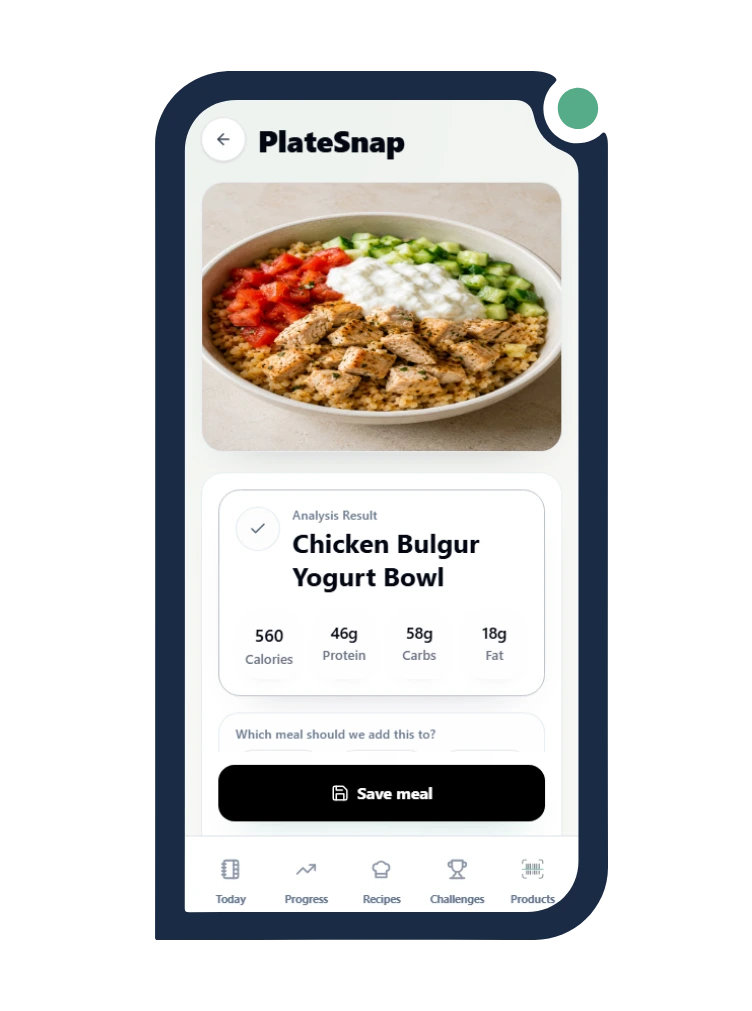
Clear calories and macros
Calio brings estimated calories, protein, carbohydrates, and fat into a daily nutrition overview.
Rather than focusing only on a single calorie number, users can see how their meals contribute to their broader daily intake.
For someone trying to increase protein consumption, for example, that can be more meaningful than simply knowing how many calories remain.
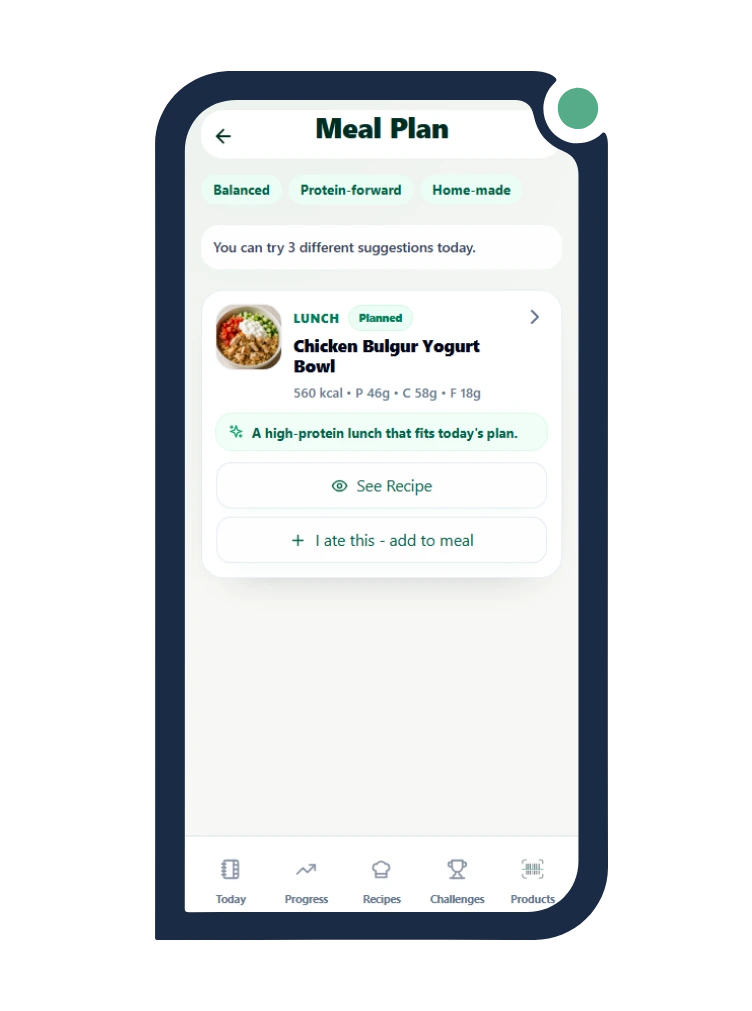
Meal planning and recipes
This is where Calio’s all-in-one approach becomes particularly relevant.
Tracking tells you what you have already eaten. Planning helps you decide what to do next.
Calio combines meal ideas, recipes, and planning features with its nutrition tracking experience.
The goal is to reduce the everyday uncertainty of deciding what to eat while keeping personal nutrition goals in view.
For users who struggle with the question, “What should I eat today?”, this combination can be valuable.
Beyond food logging
Calio also brings related daily wellness tools into the experience, including water intake, activity, intermittent fasting, caffeine, and progress tracking.
The result is an approach centered on everyday nutrition habits rather than calorie counting alone.
What we like
- Flexible food entry through photos, voice, and text.
- Daily calorie and macro summaries.
- Meal ideas, recipes, and planning features.
- Support for different personal nutrition goals.
- Related habit tracking in one experience.
- A focus on building a manageable daily routine.
What to consider
Calio may not be the first choice for someone who needs highly detailed micronutrient analysis, specialized sports-nutrition algorithms, or an extensive legacy food database.
Its AI-generated nutritional values are estimates rather than laboratory measurements, and some capabilities depend on account access and usage limits.
Our verdict
Calio is our top all-in-one pick for 2027 because it connects food tracking with the decisions users make throughout the day.
Its appeal is not simply that it can estimate calories from a meal photograph. Several competing apps can do that.
The more meaningful proposition is that users can track their meals, review their nutrition, explore what to eat next, and follow their daily habits within one connected experience.
For people who want nutrition tracking to fit their lives rather than dominate them, Calio is worth considering.
Explore Calio: https://calio.live
2. MyFitnessPal — Best for an Established Food Logging Ecosystem
Best for: People who want comprehensive food logging tools, familiar tracking workflows, and connections with other fitness services.
Website: https://www.myfitnesspal.com
MyFitnessPal remains one of the most recognizable names in calorie counting.
Its central strength is a mature food logging experience built around searchable foods, saved meals, recipes, nutrition targets, and fitness-related integrations.
The app supports traditional manual logging alongside more convenient premium features.
Key features
Users can record food and exercise, track calories and macros, create custom foods and recipes, and follow their progress.
Premium plans provide additional capabilities, including barcode scanning, Meal Scan, and deeper nutritional insights.
MyFitnessPal also offers Premium+, which extends the experience into meal planning and grocery tools.
What we like
MyFitnessPal is especially relevant to people who have already built an extensive logging history or who value a familiar food diary.
Its broad tracking ecosystem is useful for users comfortable managing nutrition through detailed food entries.
What to consider
Some faster logging options require a paid subscription.
For example, Meal Scan is a Premium feature, and supported operating systems and app languages can affect its availability.
Our verdict
MyFitnessPal is a strong option for established calorie trackers who prioritize a comprehensive logging ecosystem and flexible nutrition settings.
Users looking for a different style of daily guidance may also wish to compare newer all-in-one approaches such as Calio.
3. Cronometer — Best for Detailed Micronutrient Tracking
Best for: Data-oriented users who want to look beyond calories and macronutrients.
Website: https://cronometer.com
Calories tell only part of the nutrition story.
Two meals with similar calorie totals can have very different amounts of fiber, vitamins, minerals, and other nutrients.
Cronometer places particular emphasis on this deeper nutritional picture.
The app supports detailed food logging and nutrient analysis. Its tracking capabilities extend well beyond basic protein, carbohydrate, and fat totals.
Cronometer has also introduced photo logging, including improvements that help users review ingredients that may be overlooked in an image.
Key features
- Detailed nutrient tracking.
- Daily nutrition reports.
- Food diary and macro analysis.
- Photo logging with editable entries.
- Additional reporting and analysis through premium features.
What we like
Cronometer is particularly compelling for people who enjoy detailed nutritional information and want to investigate the composition of their diets more closely.
What to consider
The depth of information may be more than casual users need.
Someone whose primary goal is to quickly log meals and decide what to cook tomorrow might prefer a more planning-oriented experience.
Our verdict
Cronometer is one of the most compelling choices for users who prioritize nutrient detail and dietary analysis.
4. YAZIO — Best for Calorie Tracking and Intermittent Fasting
Best for: People interested in combining calorie tracking, nutrition goals, and fasting routines.
Website: https://www.yazio.com
YAZIO combines familiar calorie counting tools with features related to nutrition goals and intermittent fasting.
Users can record meals, monitor their macros, and use the app to follow progress toward their dietary targets.
YAZIO has also introduced AI-powered meal recognition, enabling users to photograph food and receive initial estimates of ingredients, portions, and nutrients.
The company explicitly advises users to review and edit AI-generated values.
What we like
YAZIO offers a recognizable combination of calorie tracking and fasting-oriented tools.
It may appeal to users who prefer a more structured nutrition routine.
What to consider
AI photo logging is part of YAZIO Pro, and users should review the current subscription features before choosing a plan.
Our verdict
YAZIO is a strong candidate for users who want calorie tracking and fasting tools in the same app.
5. Cal AI — Best for Photo-First Calorie Logging
Best for: People who want to photograph meals instead of entering foods individually.
Website: https://www.calai.app
Cal AI puts AI-powered calorie estimation at the center of its experience.
Its core proposition is simple: take a picture of a meal and receive estimated calories and macronutrients.
The app also supports barcode scanning, food searches, progress tracking, and related fitness features.
What we like
Cal AI has a clear and easily understood use case.
For someone whose biggest obstacle is the time required to log food, a photo-first workflow is an appealing starting point.
What to consider
A photograph alone cannot reliably reveal every ingredient or exact portion.
Cooking oils, hidden sauces, recipe composition, and food preparation can all affect the nutritional estimate.
Users should treat the initial result as a starting point and correct it when necessary.
Our verdict
Cal AI is worth comparing for users whose main priority is fast, image-based food logging.
For people who also want connected meal planning and broader daily nutrition guidance, Calio offers a different product emphasis.
6. MacroFactor — Best for Adaptive Calorie and Macro Coaching
Best for: Fitness-focused users who want calorie targets that adapt to their recorded intake and weight trends.
Website: https://macrofactorapp.com
MacroFactor approaches nutrition tracking through an adaptive coaching system.
Rather than relying entirely on a fixed calorie target, its expenditure model uses logged energy intake and changes in body-weight trends to estimate energy needs.
These estimates inform adjustments to calorie and macro recommendations.
MacroFactor also offers AI food logging through photographs and text-assisted image analysis.
What we like
MacroFactor’s adaptive approach is especially interesting for people whose training, body weight, and energy needs change over time.
Its structured coaching workflow may appeal to experienced users who consistently track nutrition and weight.
What to consider
Its algorithm depends on sufficiently consistent logging.
Users who rarely record meals or want only a lightweight food journal may not take full advantage of its adaptive features.
Our verdict
MacroFactor is a strong specialist option for adaptive macro coaching, particularly for people focused on body composition and training-related nutrition.
7. Lose It! — Best for Straightforward Weight Management
Best for: People who prefer a calorie-tracking experience centered on weight management.
Website: https://www.loseit.com
Lose It! is built around helping users establish nutrition targets and monitor their food intake.
The app combines a traditional food diary with convenient recording methods.
Depending on access and device support, users can search for foods, scan barcodes, photograph meals, and use voice-assisted entry options.
Its Snap It feature recognizes foods from photographs and suggests entries for the food diary.
What we like
Lose It! provides a familiar way to connect meals, calorie goals, and progress.
Users who enjoy structured tracking may appreciate its focus on weight-related goals.
What to consider
Snap It is a Premium feature, and its current availability is affected by the device language setting.
As with other trackers, results depend on the quality of food and portion entries.
Our verdict
Lose It! is a practical choice for people primarily interested in maintaining a consistent calorie and weight-management log.
8. Lifesum — Best for Structured Healthy Eating and Diet Plans
Best for: People who want nutrition tracking alongside meal plans and lifestyle-oriented guidance.
Website: https://lifesum.com
Lifesum combines calorie counting with broader healthy eating tools.
Its features include macro tracking, food ratings, diet plans, recipes, hydration tracking, and integrations with health and fitness devices.
The app has also developed multimodal AI logging, allowing people to record meals through photos, voice, text, and barcodes.
What we like
Lifesum’s combination of food logging, meal plans, and healthy eating guidance makes it a credible alternative for users who want more than a conventional calorie counter.
Its structured dietary programs may be useful for those who prefer following an established plan.
What to consider
Some tools and personalized experiences require Premium access.
Users should also distinguish between following a prestructured dietary program and receiving flexible meal ideas tailored to day-to-day circumstances.
Our verdict
Lifesum is one of the stronger alternatives for users looking for a combination of nutrition tracking and structured eating programs.
9. Foodvisor — Best for Guided Nutrition and Photo Analysis
Best for: People who want food tracking alongside educational nutrition guidance.
Website: https://www.foodvisor.io
Foodvisor combines a food diary with photo-based nutritional analysis and guided wellness content.
Its free version supports manual food logging, while the premium experience includes photographic meal analysis, educational courses, recipes, and personalized daily summaries.
What we like
Foodvisor’s emphasis on nutrition education and practical guidance may be helpful for users who want to improve their understanding of everyday food choices.
What to consider
Photo analysis is part of the paid experience.
Users should compare the available coaching and educational tools with their specific goals before subscribing.
Our verdict
Foodvisor is worth evaluating for users who value nutrition education alongside calorie tracking.
10. FatSecret — Best for Free Core Food Tracking Tools
Best for: Budget-conscious users looking for useful calorie and macro tracking without paying for every core feature.
Website: https://www.fatsecret.com
FatSecret offers a food diary, calorie and macro tracking, barcode scanning, progress tools, and community features.
A significant advantage is the availability of several core tracking capabilities in its free experience.
The app also supports additional food-entry methods, including photo-based options, although specific feature access may vary.
What we like
FatSecret offers a practical entry point for people who want to start tracking their meals without immediately committing to an expensive subscription.
Its food database, barcode scanning, and free macro tracking are particularly relevant.
What to consider
The interface and tracking-focused workflow may not be ideal for everyone.
Users looking for extensive personalized meal planning should also compare the paid capabilities of alternative apps.
Our verdict
FatSecret remains a worthwhile choice for people who prioritize free food logging and basic nutrition tracking.
AI Calorie Tracking vs. Traditional Food Logging: What’s Better in 2027?
One of the biggest decisions when choosing a nutrition app is how you prefer to record food.
Traditional tracking usually involves searching for an ingredient or branded product, selecting a portion, and adding it to a diary.
AI-based tracking may begin with a photograph or a natural-language description.
Neither approach is universally superior.
Traditional logging
Traditional entry can be particularly useful when a food’s identity and quantity are known.
For example, scanning the barcode on a packaged product and recording the measured serving may provide more useful information than estimating that product from a photo.
However, manual searching can become time-consuming, especially for homemade dishes.
AI-powered photo logging
Photo logging can significantly simplify the first step of recording a meal.
Instead of individually searching for rice, chicken, vegetables, and sauce, a user can start with one photograph.
The limitation is that computer vision cannot reliably determine everything about a meal.
A photograph may not reveal the amount of oil used, whether a sauce contains sugar, or how an ingredient was prepared.
Portion estimation can also be difficult without reliable scale information.
Voice and text logging
Describing a meal offers a useful middle ground.
A user might enter:
“I had grilled chicken, rice, a small salad, and one tablespoon of olive oil.”
That description can include preparation and quantity information that may not be obvious in a photograph.
The best approach combines convenience with review
For everyday users, the most useful nutrition app may be one that offers several ways to log meals and makes correcting estimates straightforward.
That is the philosophy behind Calio’s flexible photo, voice, and text logging experience.
The goal should not be to remove human judgment. It should be to reduce unnecessary effort while helping users make informed choices.
Why the Future of Calorie Tracking Is About More Than Calories
Tracking food can reveal patterns.
It might show that breakfast regularly contains little protein or that most of the day’s calories are consumed late in the evening.
But information alone does not determine what to eat tomorrow.
This is an important distinction.
A calorie tracker answers:
“What did I eat?”
A nutrition companion can also help answer:
“What could I eat next?”
For example, imagine someone who wants to eat more protein while maintaining a balanced daily intake.
A traditional food diary may display the current protein total.
A planning-oriented nutrition tool can help that person explore suitable meal ideas and recipes.
Similarly, someone trying to establish a consistent routine may benefit from seeing meals, hydration, and activity together rather than managing them in unrelated places.
This is why integrated nutrition tools are an interesting direction for 2027.
Calio’s approach brings together logging, understanding, and planning. Its purpose is not to replace professional dietary advice but to make everyday nutrition decisions more manageable.
Which Calorie Tracking App Is Best for Your Goal?
Best for weight loss
For users who want straightforward calorie monitoring, Lose It! and MyFitnessPal are established options.
Calio may be particularly appealing to people who also want meal ideas, habit tracking, and practical day-to-day guidance.
No app can guarantee weight loss, and a sustainable approach should take individual nutritional needs into account.
Best for muscle gain
MacroFactor is a strong choice for experienced users interested in adaptive calorie and macro targets.
Calio is worth considering for users who want to keep protein, calories, meals, and everyday consistency in view without adopting a highly technical workflow.
Best for detailed nutrition analysis
Cronometer stands out for its extensive nutrient tracking and reporting capabilities.
If micronutrient analysis is a priority, it deserves careful consideration.
Best for AI food photography
Cal AI focuses strongly on the simplicity of photo-based logging.
Calio, MyFitnessPal, YAZIO, Lifesum, MacroFactor, and several other options also offer image-assisted food logging in their respective experiences.
The right choice depends on how easily users can review results and what they want to do with the information afterward.
Best for healthy eating habits
Calio and Lifesum are both worth exploring.
Calio emphasizes a connected daily flow of tracking, understanding, and planning, while Lifesum offers structured diet programs and broader healthy eating features.
Best for a free calorie tracker
FatSecret offers several useful core features for free.
Other apps offer free or limited-access experiences, but users should review exactly what is included before choosing a subscription.
What Should You Look for in a Calorie Tracking App in 2027?
Before downloading an app, ask yourself five questions.
Will I actually use it every day?
A complex feature list means little if recording a simple meal feels like work.
Can I correct the app’s estimates?
AI makes food tracking easier, but no camera can perfectly identify every ingredient or portion.
Does it support my actual goal?
Weight loss, muscle gain, and improving dietary variety can require different tools.
Does it help me make decisions?
Seeing a calorie total is useful. Understanding what that means for your next meal may be even more useful.
Is the cost reasonable for the features I need?
Compare the free version, subscription limits, trial conditions, and renewal pricing before paying.
The best calorie tracker is ultimately the one you can use consistently and appropriately for your needs.
Frequently Asked Questions
What is the best calorie tracking app for 2027?
There is no single app that is best for everyone. Our all-in-one editorial pick is Calio because it combines AI meal logging, calorie and macro summaries, meal planning, and daily habit tools. Cronometer is particularly suitable for detailed nutrient analysis, while MacroFactor specializes in adaptive nutrition coaching.
Can AI calculate calories from a food photo?
AI can estimate calories and macronutrients using visual food recognition and related information. However, estimates can be affected by portion sizes, hidden ingredients, cooking methods, and image quality. Users should review the results before relying on them.
Is Calio a free calorie tracking app?
Calio offers a way to get started for free, with additional capabilities and usage allowances depending on access or subscription status. Visit the official website for current availability and plan details.
Is Calio better than MyFitnessPal?
It depends on your priorities. MyFitnessPal offers an established food logging ecosystem and extensive tracking functionality. Calio emphasizes a connected experience that brings together meal logging, daily nutrition understanding, planning, and habits. Users should choose based on their goals rather than assuming either app is universally better.
What is the best calorie tracking app for beginners?
Beginners may benefit from an app with flexible meal entry, understandable nutrition summaries, and a manageable daily routine. Calio, Lose It!, Lifesum, and FatSecret are among the options worth comparing.
What is the best app for tracking protein and macros?
MacroFactor is a strong option for adaptive macro coaching, Cronometer provides detailed nutrient information, and Calio offers daily calorie and macro tracking alongside meal planning.
Do I have to count calories forever?
Not necessarily. For some people, tracking can be a temporary tool for understanding eating patterns. Others prefer ongoing monitoring for fitness or nutrition goals. The appropriate approach depends on individual needs.
Are calorie tracking apps medically accurate?
Calorie trackers are wellness tools, not substitutes for clinical assessments. Food data, portion estimates, and individual energy requirements can vary. People with medical dietary needs should consult a qualified healthcare professional.
Final Verdict: The Best Calorie Tracker Is the One That Helps You Keep Going
Calorie tracking in 2027 is no longer just about entering numbers into a food diary.
Artificial intelligence has introduced new ways to record meals. Nutrition apps now offer increasingly sophisticated reports, personalized recommendations, and planning tools.
The challenge is choosing a system that makes sense for your life.
MyFitnessPal remains a strong option for comprehensive food logging. Cronometer offers exceptional detail for nutrient-focused users. MacroFactor stands out for adaptive nutrition coaching. YAZIO, Lifesum, and other established competitors provide their own useful combinations of tracking and guidance.
Our top all-in-one pick is Calio.
What makes Calio appealing is the connection between tracking meals, understanding daily nutrition, and deciding what to eat next.
Rather than treating healthy eating as a collection of numbers, Calio brings these activities into a more connected daily experience.
For people who want a simple way to work toward their nutrition goals, build consistent habits, and spend less time managing food logs, it is an option worth exploring.
Track your meals. Understand your nutrition. Plan what comes next.
Discover Calio
Healthy eating should fit your life.
Explore AI meal logging, daily calorie and macro tracking, recipes, meal ideas, and connected habit tools.
Try Calio for free at Calio.live.
Research Sources and Product References
Product descriptions were checked against publicly available official sources in November 2026.
- Calio — Official Website
- MyFitnessPal — Free, Premium and Premium+
- Cronometer — Product Updates
- YAZIO — Calorie Counter
- Cal AI — Official Website
- MacroFactor — Expenditure and Coaching
- Lose It! — About the App
- Lifesum — Official Website
- Foodvisor — Free and Premium Features
- FatSecret — Official App
This article is informational and does not provide medical or nutritional treatment advice. Product functionality, subscription plans, and geographic availability are subject to change.